私がまだ20代だった頃、
年配の上司が、戦時中、学徒動員で名古屋の工場へ派遣された時のことを話してくれた。
空襲警報が鳴り、防空壕へ逃げた。
自分は間に合ったが、友人は間に合わず、入り口近くで焼夷弾にやられた。
倒れた友人をなんとか防空壕へ引き入れようと腕をつかんだ時、友人の腕の皮がずるりと剥けた。
「あの感覚が忘れられないんだよ」
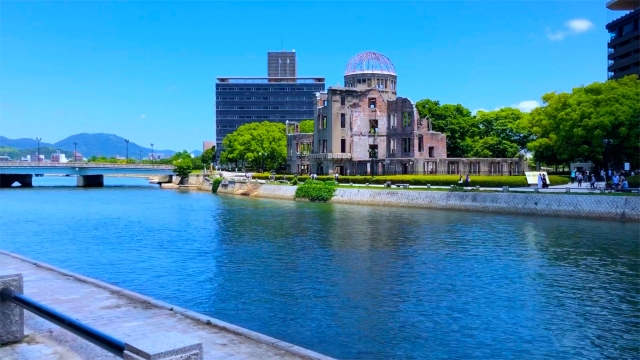
「広島や卵食ふ時口ひらく」――西東三鬼
この句を読んだ時、若き日の私に上司が話してくれた、あの記憶がよみがえった。
西東三鬼は『続神戸』の中で、この句が生まれた夜について記している。
荒れ果てた広島の街を、誰とも言葉を交わさず一人歩いた。路傍の石に腰を下ろし、ゆで卵の殻をむく。つるりと現れた白い卵の肌に、閃光と、人々の皮膚がむけた街の姿が重なる。そして卵を食べるため、その夜初めて口を開いた。(西東三鬼『続神戸』より要約)
この句も、上司の話も、怖く、悲しい。
グロテスクでさえある。
けれど、そこから目を背けることもできない。
上司は、悲壮感を漂わせて話したわけではなかった。
むしろ何気ない思い出話のように、話しながら笑った。
けれど話し終えると、お猪口の酒をぐいっと流し込んだ。
目を背けることのできないものを、何もかも身体の内へ飲み込んでしまおうとしているように、
私には見えた。
悲しいことも、苦しいことも、その隙間に感じた楽しいことも、
私たちの身体の一部となって、ずっと残っていく。
墨をすりながら、そんなことを考える夏の日。
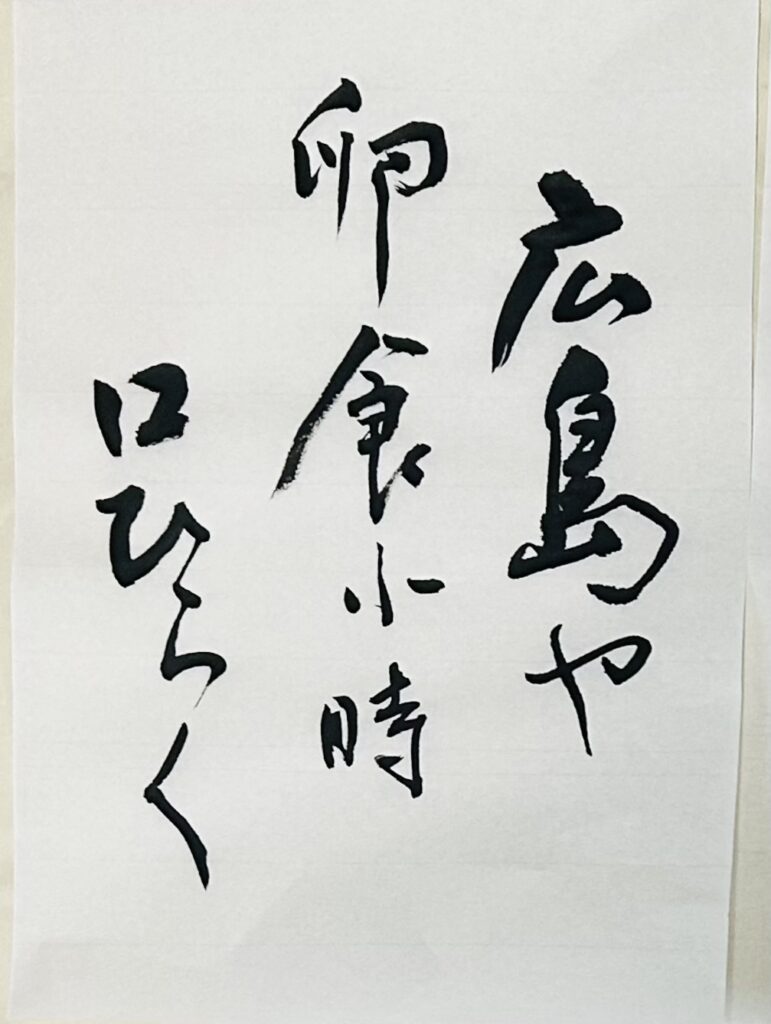
Hiroshima—The Mouth Opens When Eating an Egg
When I was in my twenties and working as a paralegal, one of the attorneys I worked for told me about his experience during the war. He had been sent to work at a factory in Nagoya as part of the wartime student labor mobilization.
An air-raid siren sounded, and they ran for the shelter. He made it inside, but one of his friends did not. Near the entrance, his friend was struck by an incendiary bomb.
Trying somehow to pull him into the shelter, my supervisor grabbed his arm.
The skin slid off.
“I can never forget how that felt,” he said.
When I encountered this haiku, I remembered the story my supervisor had told me when I was young.
Hiroshima—
when eating an egg,
the mouth opens
—Sanki Saito
In Zoku Kobe, Saito wrote about the night from which this haiku emerged.
He walked alone through the devastated city of Hiroshima without speaking to anyone. Sitting down on a stone by the roadside, he began to peel a boiled egg. When its smooth white surface appeared, it evoked a searing flash and the image of human skin peeling away throughout the city. To eat the egg, he opened his mouth for the first time that night.
(Summarized from Sanki Saito’s Zoku Kobe)
Both the haiku and my supervisor’s story are frightening and sorrowful. They are even grotesque. Yet I cannot turn away from them.
My supervisor did not tell his story with any great show of grief. If anything, he smiled as he spoke, as though recalling an ordinary episode from long ago.
But when he finished, he lifted his small sake cup and swallowed the drink in one gulp.
To me, it looked as though he wanted to take everything he could not turn away from and swallow it whole.
The sorrow, the suffering, and even the moments of happiness found in between—all of them become part of our bodies and remain with us.
These were my thoughts on a summer day as I ground the ink.